
|
No. 003 · 6 min read |
|
|
|
Issue No. 003
You might be drinking your coffee too hot.
Some rituals are sacred.
Welcome back to The Dial. If this is your first issue, welcome to the ritual!
Last week, we explored how a few small upgrades could help you get more from the coffee machine you already own. This week, we're looking at something that doesn't cost a penny.
We've all been there. You've just made a great coffee, it smells incredible, and you're already taking that first sip.
But what if the best part comes a few minutes later?
We're exploring why a little patience might completely change how you experience your morning coffee, along with a simple experiment you can try at home.
Six minutes. One coffee at a time.
Right, let's make some coffee.
|
|
|
In this issue
| 01 | The main pour Why your first sip might not be your best. |
| 02 | The adjustment The three-sip test: one cup, three moments. |
| 03 | Worth drinking Ozone Coffee: the one that really stood out. |
| 04 | On our radar Could sunshine roast your next bag of coffee? |
| | Also: free print no. 003 Something for the wall, at the bottom of the email. |
|
|
|
01 · The main pour
You might be drinking your coffee too hot.
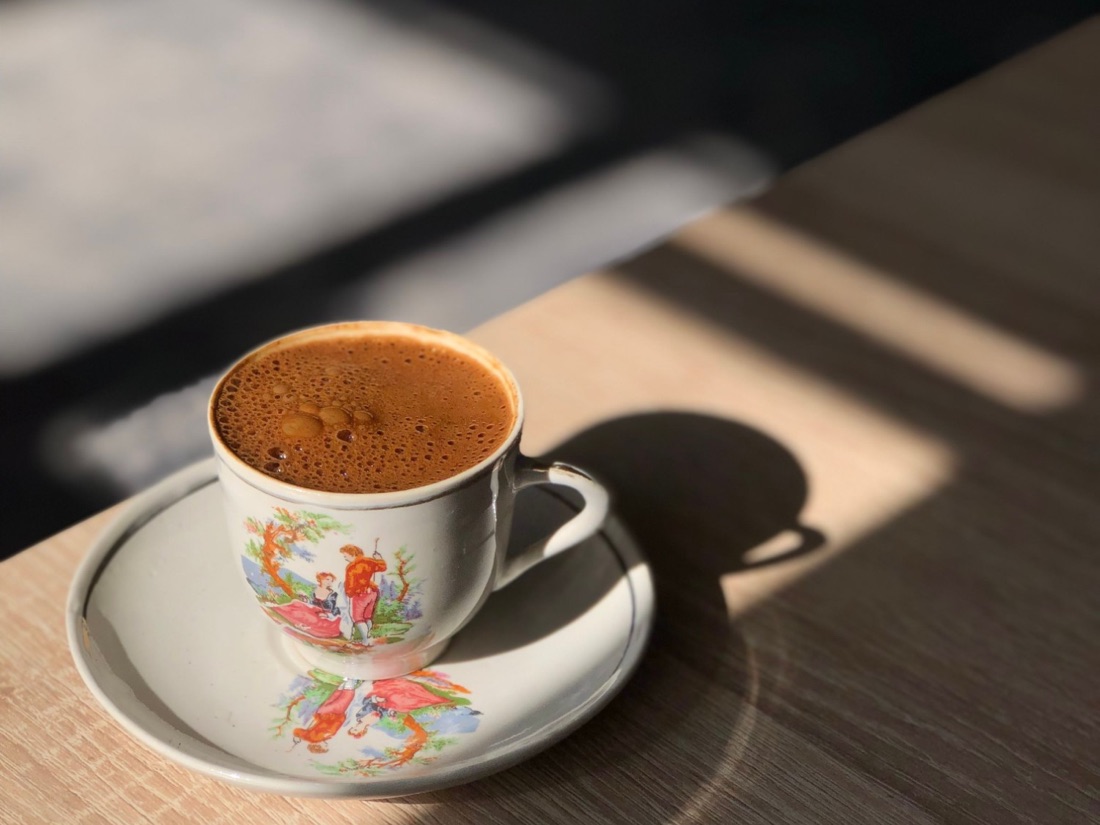
There's something particularly satisfying about that first sip of freshly made coffee. The machine's just finished, the kitchen smells incredible and you're already reaching for the cup before you've even put the milk away.
But here's something worth thinking about: that first sip might actually be the least interesting one.
When coffee is piping hot, some of its more delicate flavours can be difficult to pick out. Give it a few minutes though and things start to change.
That acidity you didn't notice before might become brighter. The sweetness might become more obvious. A coffee that tasted fairly ordinary when it was first poured can suddenly become a lot more interesting.
It's one of the reasons coffee professionals taste coffee at different stages during cupping sessions.
They're not just waiting for it to become drinkable, they're paying attention to how the flavour develops.
And this isn't just something that matters for expensive, competition-grade coffee, the same principle applies to your everyday flat white, filter coffee, or morning espresso.
Of course, we're not suggesting you leave every coffee sitting on the counter until it's lukewarm.
There's plenty to be said for a hot coffee on a cold morning.
But the next time you make something you really enjoy, give it a minute. You might discover that the best part of your coffee comes after the first sip.
|
|
|
02 · The adjustment
The three-sip test.
This week's adjustment is probably the easiest one we've suggested so far. No changing your grind size. No adjusting your dose. No buying another piece of equipment. Just make your coffee exactly as you normally would.
|
|
Here’s what to try
| 01 | The first sip. Once it’s comfortable to drink, take a sip. What’s your first impression? | | 02 | Two minutes later. Try it again. Are you noticing anything you missed the first time? | | 03 | Five minutes later. One final sip. Which of the three did you enjoy most? |
|
|
|
You don't need to write anything down or start scoring your coffee out of ten. Just pay attention to what you enjoy. You might prefer that first sip. You might find yourself waiting a little longer next time. Either way, it's a good excuse to slow down and enjoy your coffee.
Same beans. Same recipe. Different experience.
|
|
|
03 · Worth drinking
El Salvador: Finca Argentina, SL28
Ozone Coffee Roasters · London
Gifted: Ozone sent us three coffees to try. These opinions are our own.
|
|
|
I've got a bit of history with Ozone Coffee. When I first started getting into home brewing, Ozone was one of the first roasters recommended to me. Not long after, I discovered they supplied the coffee at Federal, one of my favourite breakfast spots in Manchester. If you've been, you'll know why I keep going back.
Then, while working in London, I found myself visiting Ozone's coffee shops whenever I had the chance.
What I didn't realise back then was that Ozone's story actually began in 1998, in the coastal town of New Plymouth, New Zealand. The roaster eventually made its way to London in 2012, bringing its approach to specialty coffee to the UK.
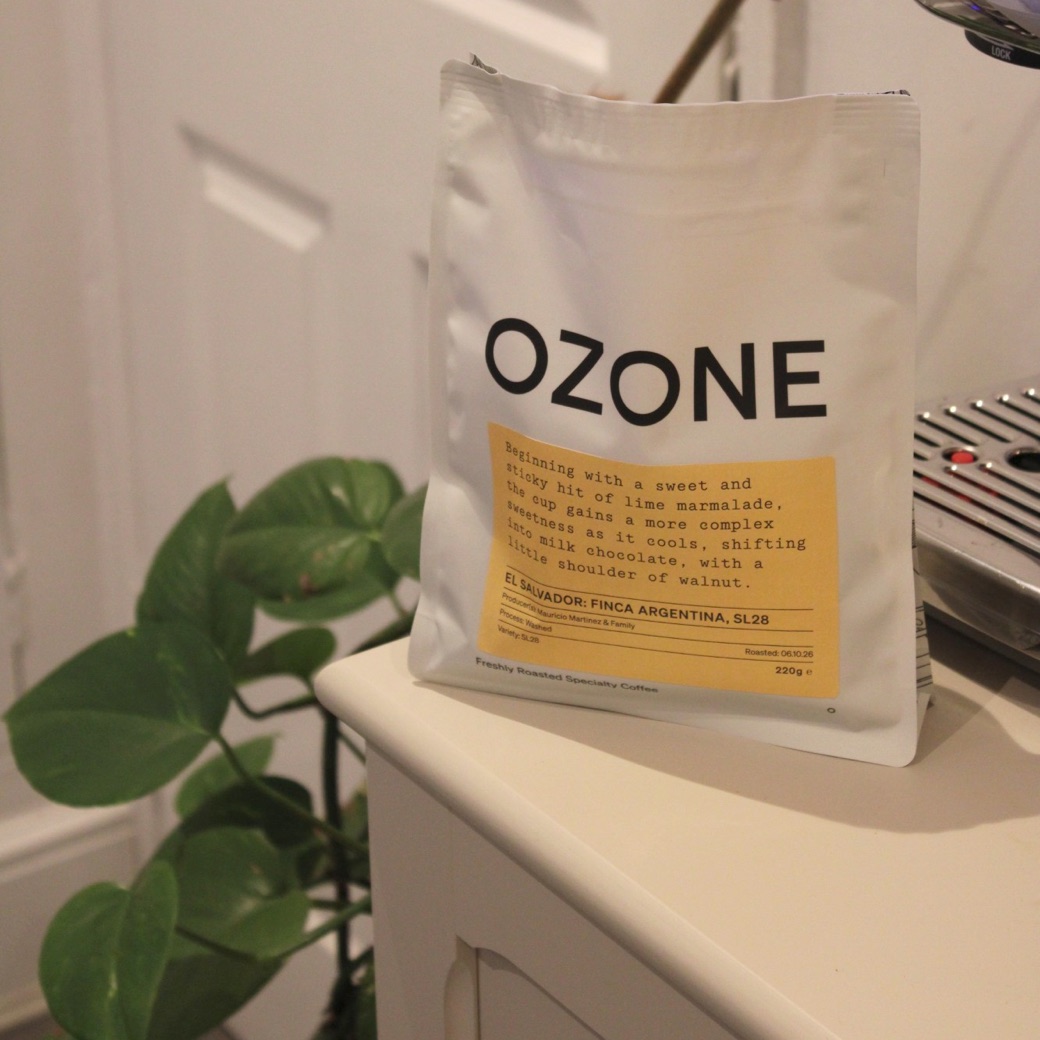
Fast forward to today, and Ozone is still a roaster I keep coming back to. They recently sent us three coffees to try for The Dial, and one in particular really stood out. Their El Salvador Finca Argentina SL28.
Grown by the Martinez family at Finca Argentina in El Salvador, this washed SL28 has tasting notes of lime marmalade, milk chocolate and walnut. I tried it as an Americano and, of course, my favourite flat white.
From the first extraction, you could tell there was something different about it. The espresso had this incredibly rich-looking crema, and the coffee itself was unbelievably smooth.
The milk chocolate sweetness really stood out, balanced by a subtle citrus character that made every sip interesting without being overpowering. Honestly, it's one of the nicest coffees I've had in a long time.
And that's what I love about discovering coffees like this. Sometimes you don't need to spend ages trying to find every tasting note on the bag. You just know when you're drinking something special.
|
The coffee Finca Argentina, SL28, Washed |
| Origin | El Salvador |
| Producer | Mauricio Martinez |
| Variety | SL28 |
| Process | Washed |
| Tastes like | Lime marmalade · Milk chocolate · Walnut |
| Price | £12.95 |
|
|
|
|
Visit Ozone Coffee
|
|
|
04 · On our radar
Could sunshine roast your next bag of coffee?
New Mexico, USA · Coffee innovation
|
|
|
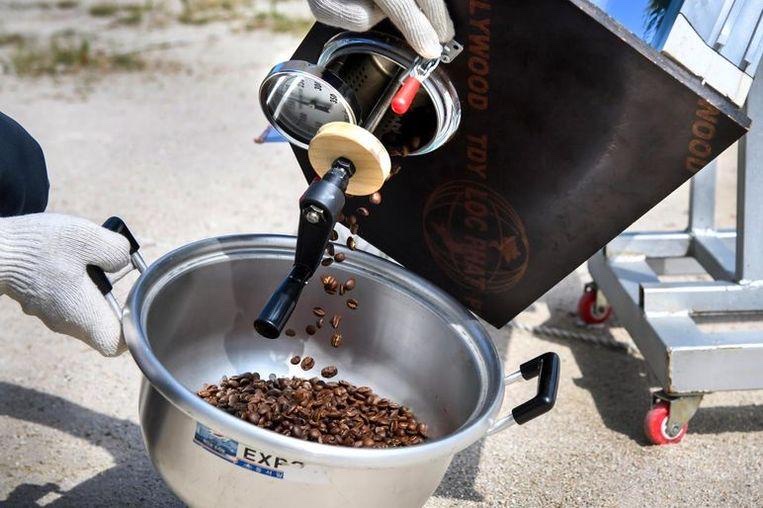
Kate Sweeney from Michael Thomas Coffee empties beans roasted with stored solar heat. Photo: Craig Fritz, Sandia National Laboratories.
|
|
Coffee roasting and sunshine aren't two things you'd normally put together. But over in New Mexico, a group of researchers might be changing that.
Scientists at Sandia National Laboratories have teamed up with local roaster Michael Thomas Coffee to experiment with roasting coffee using energy from the sun. And the clever bit? They're storing that energy in rocks.
Solar panels generate electricity, which is converted into heat and stored inside a bed of rocks. That heat can then be released into a traditional coffee roaster, reaching temperatures of up to 600°C.
Even better, the stored heat can last for days, meaning the roaster doesn't need constant sunshine to operate.
The team has already successfully roasted coffee using the system, and they're exploring ways to adapt existing roasting machines rather than replacing them entirely. It's still early days, but the potential is pretty exciting.
Less reliance on fossil fuels, potentially lower energy costs, and a more sustainable way to produce something we all love. Who would’ve thought the future of coffee roasting might involve a pile of hot rocks?
|
|
Source: Sandia National Laboratories, “Coffee and sunlight: a natural blend”, 3 August 2026.
|
|
Got a coffee we should try?
Know a roaster we should be drinking? Or an interesting coffee story we’ve missed?
We're always looking for great coffee, fresh ideas and people doing something different.
Tell us what we should explore next →
|
|
|
|
Free print no. 003
Something for the wall
|
|
|
|
You made it to the bottom, so this one's on us. Print it, frame it, or stick it on the fridge. If it makes it onto your wall, tag @thedialcoffee.
|
|
|
|
Find us on Instagram →
|
|
P.S. Scientists have identified more than 800 volatile compounds in roasted coffee. That’s hundreds of different molecules contributing to the aroma of your morning cup.
The Dial
|
| |