|
No. 006 · 8 min read |
|
|
|
Issue No. 006
Fresh coffee isn't always better.
Some rituals are sacred.
There's something a little confusing about buying good coffee.
We're constantly told that fresh is best. Fresh ingredients. Fresh bread. Freshly roasted coffee.
But here's the strange thing.
Sometimes, the best thing you can do with a freshly roasted bag of coffee is absolutely nothing. Just leave it alone for a few days.
This week, we're finding out why, looking at how to keep those beans tasting their best, and heading to the mountains of Indonesia to discover a coffee with a story worth sharing.
We've also got a little coffee myth to clear up, along with some new discoveries from The Coffee Library.
Anyway, coffee ready? Let's get into it.
|
|
|
In this issue
| 01 | The main pour Is fresher coffee always better? |
| 02 | The adjustment Your coffee deserves better than an open bag. |
| 03 | Worth drinking Django Coffee Co: from the mountains of Sumatra. |
| 04 | Coffee Talk Does stronger coffee mean more caffeine? |
| | Plus: from The Coffee Library A couple of coffees worth discovering, and free print no. 006 at the bottom of the email. |
|
|
|
01 · The main pour
Is fresher coffee always better?
There's something incredibly satisfying about opening a freshly roasted bag of coffee.
That first smell. The anticipation of trying something new. Maybe even checking the roast date and feeling rather pleased with yourself when you realise it was roasted just yesterday.
Surely, the fresher the beans, the better the coffee?
Well, not necessarily. Sometimes, coffee actually needs a little time to get better.
When coffee beans are roasted, a whole series of chemical reactions takes place, creating the flavours and aromas we love.
But something else happens during roasting. Carbon dioxide gets trapped inside the beans. Then, after roasting, that gas slowly starts escaping.
|
|
Degassing
The slow release of carbon dioxide from freshly roasted beans. It's completely natural, and it's one of the reasons you might notice a little valve on your bag of specialty coffee. That valve lets gas escape without letting lots of fresh air back inside. Clever, really.
|
|
|
So why does any of this matter?
When you brew coffee that's extremely fresh, some of that trapped carbon dioxide is released as soon as the hot water hits the grounds.
Too much gas can interfere with how evenly the water extracts the coffee.
For espresso, this can sometimes mean inconsistent shots, excessive crema or flavours that haven't quite settled down. Which is interesting, considering we explored why more crema doesn't always mean better espresso back in Issue 004.
For filter coffee, you'll often notice the gas escaping during the bloom, when the grounds bubble and expand after the first pour of water.
It's one of the reasons some coffees benefit from being left to rest after roasting.
But how long should you actually wait?
Unfortunately, there's no magic number. It depends on the coffee, the roast and how you're brewing it.
Some coffees taste fantastic after a few days. Others, particularly certain lighter roasts brewed as espresso, can benefit from resting longer.
Then there's the other side of freshness. As coffee ages, it slowly loses the aromatic compounds that make it taste so good. Exposure to oxygen, heat and moisture can speed that process up.
So there's a balance.
|
|
Finding the balance
| 01 | Too fresh. Your coffee might be difficult to extract consistently. | | 02 | Too old. Some of those lovely flavours may have disappeared. |
|
|
|
The takeaway?
Next time you receive a freshly roasted bag of coffee, don't feel like you need to open it immediately.
Have a look at the roast date. Check whether your roaster recommends a resting period. If your coffee tastes a little different over the first couple of weeks, pay attention.
You might discover that your favourite brewing day isn't actually the freshest one.
Sometimes, good coffee just needs a little patience.
|
|
|
02 · The adjustment
Your coffee deserves better than an open bag.
Right, so we've established that coffee freshness is a little more complicated than we first thought.
But once your beans are ready to drink, how do you keep them tasting their best?
Well, the good news is that you probably don't need to buy anything particularly fancy. You just need to protect them from a few things.
Air, heat, light and moisture.
These are some of the biggest enemies of freshly roasted coffee. Oxygen can gradually alter the compounds responsible for flavour, while heat speeds up the process. Moisture isn't particularly helpful either.
And leaving your coffee sitting in direct sunlight on the kitchen counter? Probably not the best idea.
|
|
Three little things worth doing
| 01 | Keep the bag sealed. Most specialty coffee arrives in packaging designed to protect the beans, often with a resealable opening and one-way valve. If the bag seals properly, there's nothing wrong with keeping your coffee in it. | | 02 | Find a cool, dark cupboard. Somewhere away from direct sunlight, moisture and the heat of your oven. And despite what you might have heard, the fridge isn't a great everyday storage solution. Condensation and unwanted odours can become a problem. | | 03 | Grind only what you need. Once coffee is ground, it loses aromas much faster. If you've got a grinder at home, keeping your coffee as whole beans until you're ready to brew is one of the simplest ways to preserve flavour. |
|
|
|
A little upgrade worth considering.
If you're someone who enjoys trying different coffees, a dedicated airtight coffee canister can be a useful addition to your setup. Some even use a vacuum mechanism to remove air from inside the container.
Do you absolutely need one? Not at all. A properly sealed coffee bag stored in a cupboard can work perfectly well.
But if you're regularly opening and closing bags, or simply want a tidier way to store your beans, a good canister might be worth considering.
|
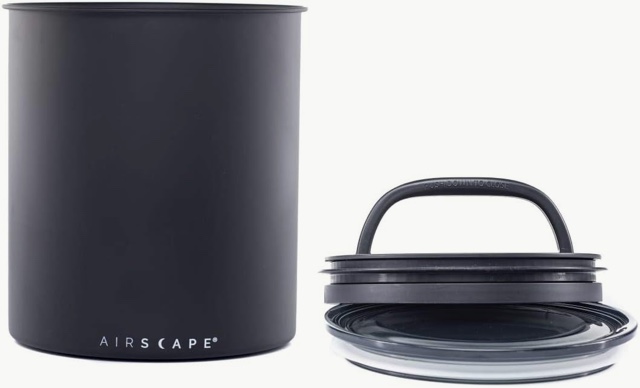
Upgrade
Airscape Coffee Canister
Affiliate link: we may earn a commission on qualifying purchases, at no extra cost to you.
|
|
|
And here's one final tip.
If you've bought more coffee than you'll drink in the next few weeks, freezing well-sealed portions can be a useful way to preserve freshness for longer.
Just make sure the packaging is airtight, and avoid repeatedly opening the same frozen container.
Your future self might thank you.
|
|
|
03 · Worth drinking
From the mountains of Sumatra.
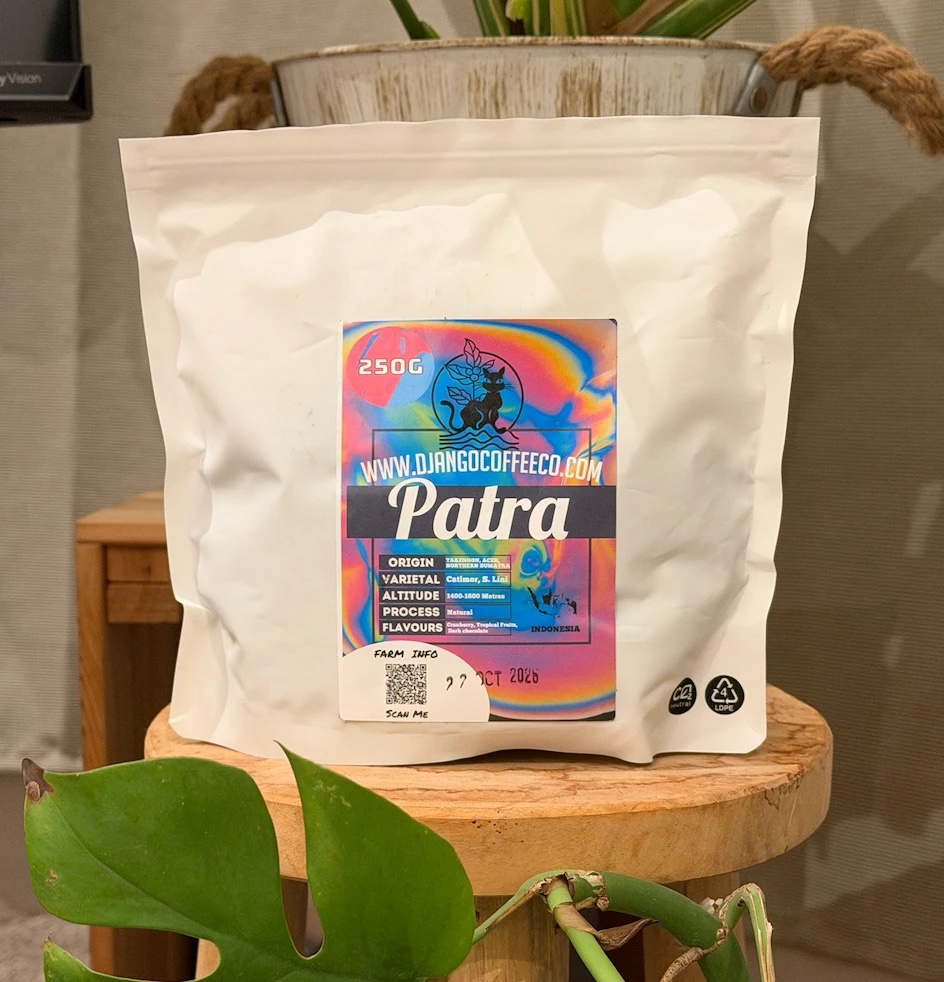
Django Coffee Co · Indonesia Patra
|
|
|
There's something quite special about discovering a coffee from a part of the world you know very little about.
This week, we're heading to the mountains of northern Sumatra, Indonesia. More specifically, the Takengon region of Aceh, an area with a long history of coffee growing and a reputation for producing some remarkable Arabica coffees.
And this week's coffee from Django Coffee Co has an interesting story behind it.
Meet Iwan.
Iwannitosa Putra, known as Iwan, is a coffee farmer and processor based in Atu Lintang, a mountainous district near Takengon. He lives there with his wife, a local schoolteacher, and their two children.
But while Iwan has a small coffee farm of his own, his work extends far beyond it.
He also buys coffee cherries from around 440 neighbouring smallholder farmers.
That's a lot of people whose coffee passes through his operation. And rather than simply buying the cherries and sending them elsewhere, Iwan has invested in facilities to process the coffee himself.
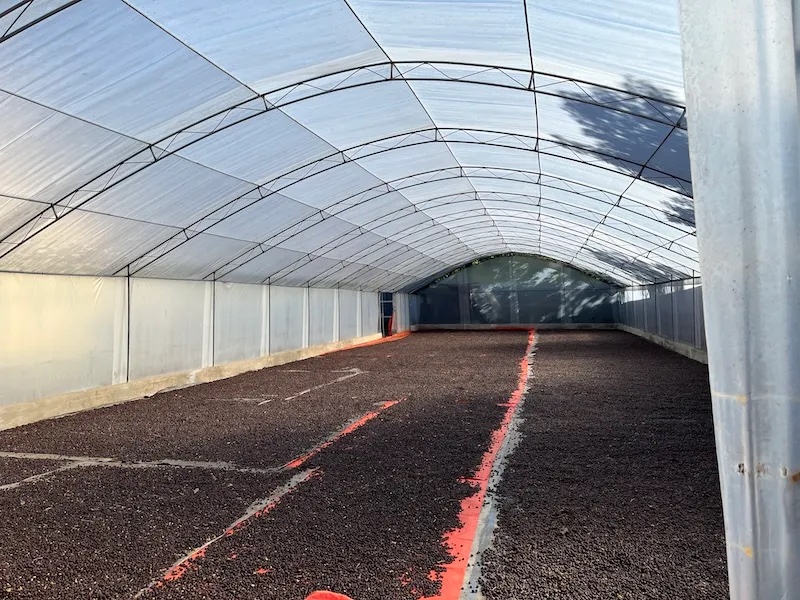
He's built a wet mill and drying tents, introduced wastewater treatment, and developed a careful approach to selecting the coffee cherries that enter production. Because when it comes to making great coffee, what happens before the beans are roasted matters enormously.
It all starts with the cherry.
Iwan and the farmers he works with have particularly high standards for the cherries they select. Only ripe, high-quality fruit is accepted for processing.
For this particular lot, the cherries were sourced from 50 farmers in Bener Meriah, central Aceh. After harvesting, they're floated in water to help separate cherries of different densities before being laid out to dry.
And this is where things get interesting.
The cherries are dried for around 15 to 25 days.
Not in an oven or industrial dryer, but on a patio beneath a specially designed canopy, with the drying time depending on the weather. It's a slow, carefully managed process.
During that time, the fruit remains around the seeds, influencing the flavours that eventually make their way into the finished coffee. If that sounds familiar, it's because we explored natural processing back in Issue 005.
This is another example of how much care goes into coffee before it ever reaches a roaster.
|
|
|
A region built around coffee.
There's another interesting part to this story. Coffee has been grown in Aceh since the colonial period, and it remains an important part of life for many communities in the region.
The Gayo people, native to the highlands of central Aceh, have a particularly strong connection to coffee farming. Generations of knowledge, experience and tradition have helped make the region known for its Arabica coffee.
And producers like Iwan are combining that history with modern processing methods and a real focus on quality.
So, what's in the cup?
Django's Indonesia Patra is a naturally processed coffee, grown at around 1,400 to 1,600 metres above sea level. It's a medium roast, suitable for both filter coffee and espresso, and the tasting notes are pretty interesting.
Dried cranberry. Tropical fruits. Dark chocolate.
That combination suggests something with a little fruitiness, balanced by richer, chocolatey flavours. A nice reminder that Indonesian coffees can offer much more variety than the earthy, heavy-bodied profiles they're sometimes associated with.
What we particularly like about discovering coffees like this is that there's always more to the story than what's written on the bag. Behind those tasting notes is a network of farmers, careful cherry selection, weeks of drying and years of experience.
Quite a lot of work for something we might drink in five minutes.
And that's part of what makes specialty coffee so interesting.
|
The coffee Indonesia Patra |
| Roaster | Django Coffee Co |
| Origin | Takengon, Aceh, Sumatra |
| Process | Natural |
| Altitude | 1,400 to 1,600 metres |
| Roast | Medium |
| Tastes like | Dried Cranberry · Tropical Fruits · Dark Chocolate |
| Price | £12.50 for 250g at time of writing |
|
|
|
|
|
04 · Coffee Talk
Does stronger coffee mean more caffeine?
Here's a question.
Which contains more caffeine: a strong, punchy espresso or a big mug of filter coffee?
If you said espresso, you're not alone. After all, espresso tastes stronger, looks stronger and comes out of a machine that makes an awful lot of noise.
Surely, it must have more caffeine? Well, not necessarily.
Stronger flavour doesn't always mean more caffeine.
Espresso is much more concentrated than filter coffee, meaning it generally contains more caffeine per millilitre. But the actual serving is usually pretty small.
A large mug of filter coffee, on the other hand, might taste considerably milder while containing more caffeine overall. It depends on the amount of ground coffee used, the beans themselves, the brewing method and the size of the drink.
And here's something else worth knowing.
Darker roasted coffee doesn't automatically contain more caffeine.
Roast level changes how coffee tastes, but it isn't a reliable way to judge how much caffeine ends up in your cup.
So next time you order an espresso because you need a serious caffeine boost, remember that the big mug of filter coffee might actually be doing more of the heavy lifting.
Of course, if you just prefer espresso, that's a perfectly good reason to order one.
Sometimes it's not about the caffeine. It's about enjoying the coffee.
|
|
|
From The Coffee Library
Your next favourite coffee might be in here.
Looking for something new to brew?
Our Coffee Library is growing, thanks to recommendations from readers like you. It's a place to discover great coffees, explore different roasters and find something you might never have come across otherwise.
Here are a couple of coffees worth exploring.
|
| 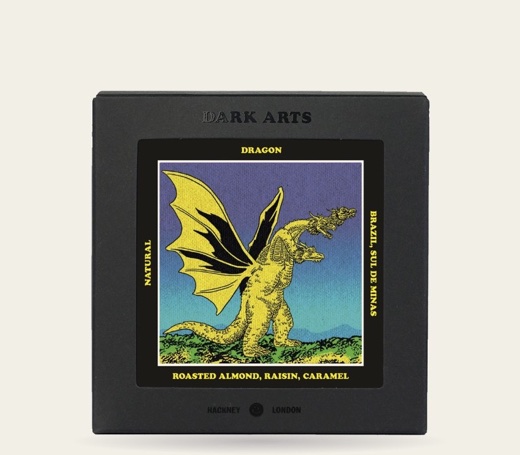 Dragon Dark Arts Coffee · Brazil Notes of roasted almond, raisin and caramel | | |
|
|
|
|
Found something worth sharing? Recommend a coffee
|
|
Good coffee deserves to be shared.
|
|
|
Free print no. 006
Something for the wall
|
|
|
|
You made it to the bottom, so this one's on us. Another little piece of The Dial for your coffee corner. Print it, frame it or stick it on the fridge. If it makes it onto your wall, tag @thedialcoffee.
|
|
|
|
|
|
P.S. That little valve on your coffee bag isn't there so you can squeeze it and enjoy the smell, although we're fairly sure we've all done it. Its actual job is to let carbon dioxide escape while helping keep oxygen out.
The Dial
|
| |
|